Far Out Recordings
Natureza
Natureza
Verfügbarkeit für Abholungen konnte nicht geladen werden
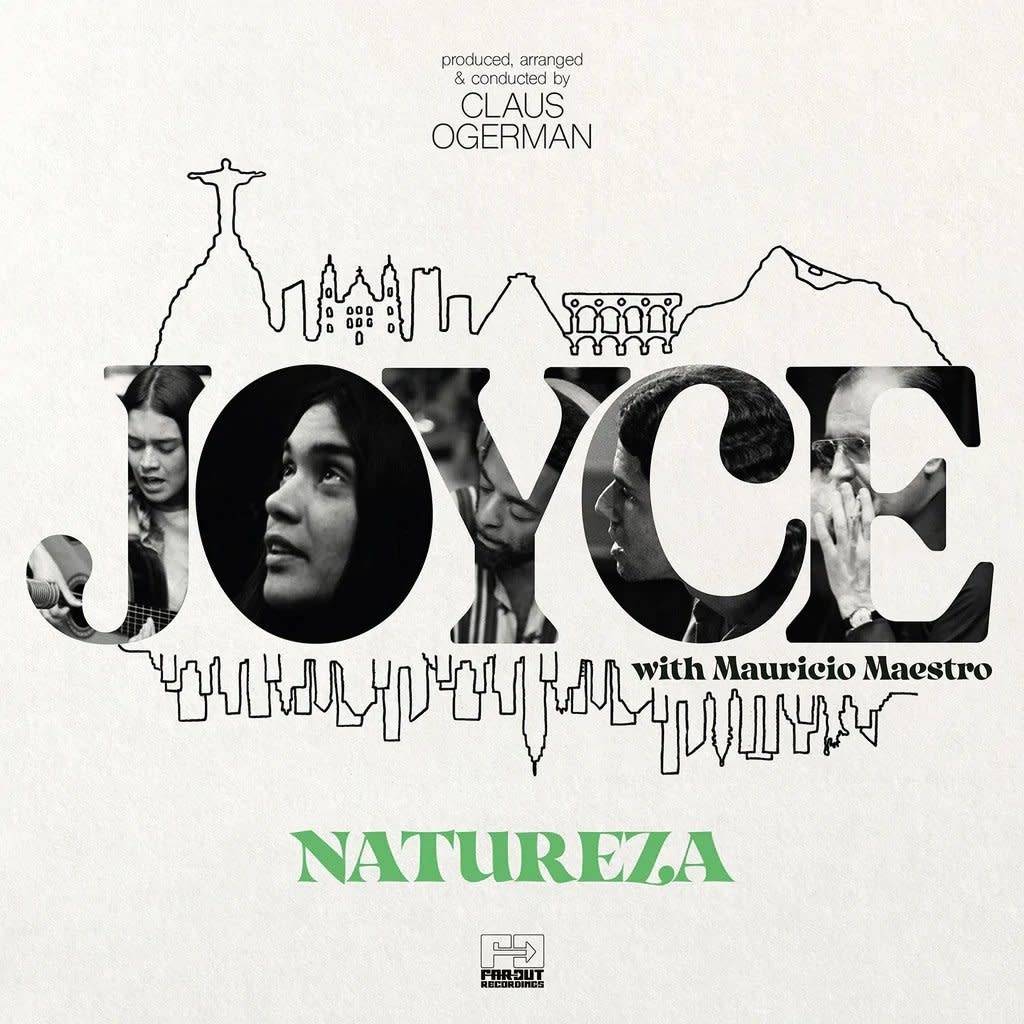
Previously unreleased 70s album by Joyce. Not long after the dawn of her career, as a teenager in Rio de Janeiro, Joyce was declared one of the greatest singers by Antonio Carlos Jobim. Yet despite reputable accolades and the fact that she has since recorded over thirty acclaimed albums, Joyce never quite achieved the international recognition of the likes of Jobim, Joao Gilberto, and Sergio Mendes, all of whom became global stars after releasing with major labels in the US.
There was a moment when it seemed she might be on the cusp of an international breakthrough. While living in New York, Joyce was approached by the great German producer Claus Ogerman. Ogerman had already played a pivotal role in the development and popularization of Brazilian music in the 1960s, recording with some of the all-time greats like Jobim and Joao Gilberto, as well as North American idols like Frank Sinatra, Billie Holiday, and Bill Evans. "Natureza" took place at Columbia Studios and Ogerman produced the album, provided the arrangements and conducted the orchestra. But mysteriously, "Natureza" was never released, and what should have been Joyce's big moment never happened.
As Joyce remembers: "I returned home, but Claus and I remained in contact, by letters and phone calls. He was very enthusiastic about the album and tried to hook me up with Michael Franks. He wanted me to go back to NYC in order to re-record the vocals in English with new lyrics, which I actually wasn't too happy about. But then I got pregnant with my third child and could not leave Brazil. And little by little our contact became rare, until I lost track of him completely. And that was it. I never heard from him again."
While Claus was known to be something of an elusive character, "Natureza's" disappearance might also have been a result of timing. The Brazilian craze was coming to an end, making way for disco and new wave at the end of the seventies, and Ogerman struggled to find a major label interested in a new Brazilian sensation. Additionally, as Joyce mentions, it wasn't quite finished. Ogerman wanted to add finishing touches to the mix and to record alternative English lyrics for the US and international markets - a critical artistic difference between Joyce and Ogerman.
As the military dictatorship's grip on Brazil began to subside in the 1980s, Joyce had a handful of hits in her home county, including a tribute to her daughters "Clareana," and the iconic "Feminina."