Diggers Factory
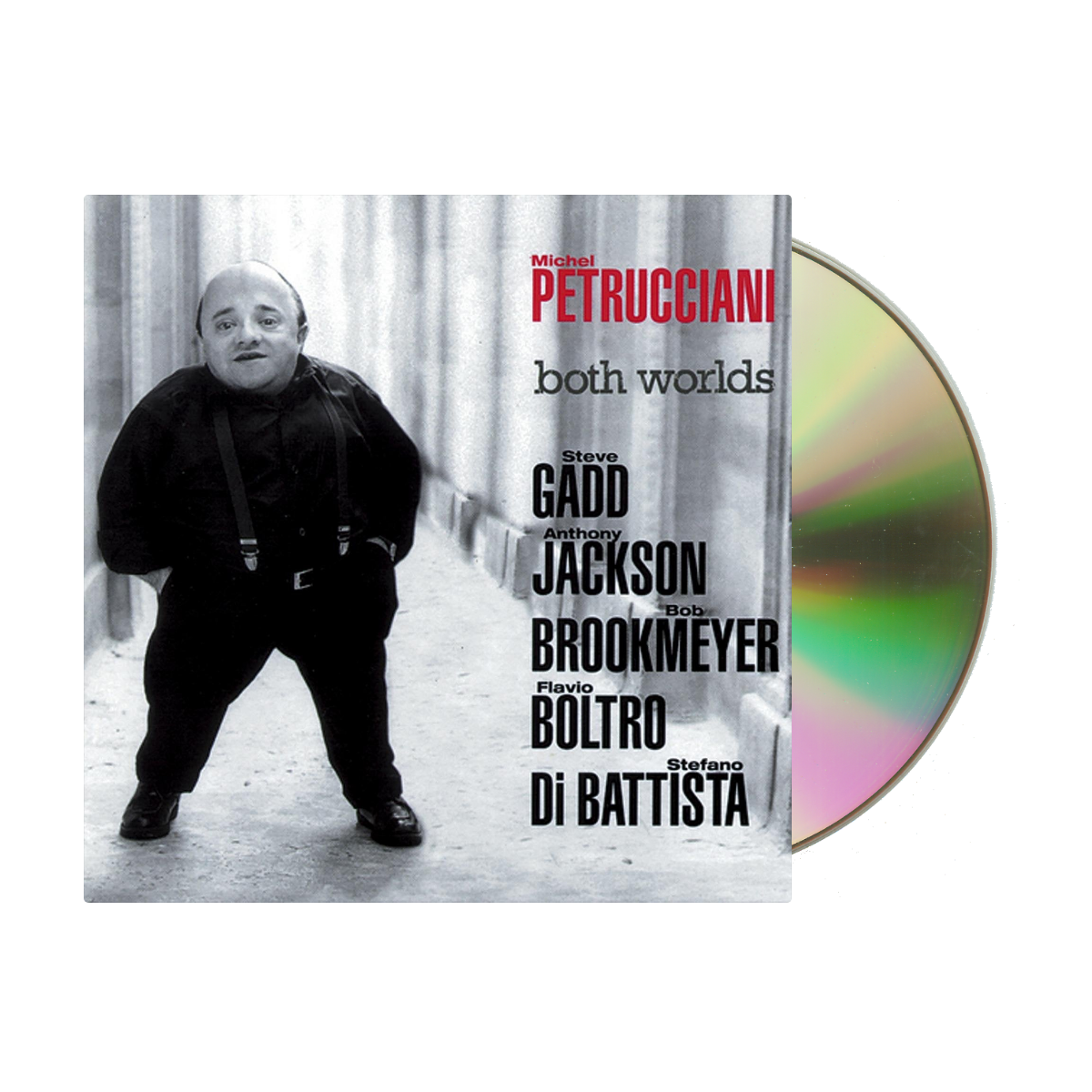
Both Worlds
Both Worlds
Impossible de charger la disponibilité du service de retrait
Both Worlds is clearly the testimony of the fruitful encounter between two worlds, between a composer and an arranger; the collaboration of two creative spaces that are dissimilar yet compatible. For the first time in his career, Michel Petrucciani entrusted his most accomplished compositions to another tailor of jazz and poet of made-to-measure, Bob Brookmeyer. The result is a magical undertaking, retaining that particularly distinctive ‘two worlds’ character in the pianist’s work: a writing imbued with classics and standards, over one of the most modern rhythm sections.
Joy, melancholy, humour and moods, this recording displays a rich emotional palette and a few nods to Rodgers and Hart (‘Petite Louise’), Return to Forever (‘35 seconds of music and more’), Maurice Chevalier (‘On Top of the Roof’) and Hollywood musicals (‘Chloé Meets Gershwin’ referring to ‘A Foggy Day’ and ‘Seven Brides for Seven Brothers ‘by Johnny Mercer).
Within an abundant discography, ‘Both Worlds’ innovates and profiles the pianist’s work in a new light. Also for the first time, Michel Petrucciani assembles a genuine group and builds a homogeneous formation where his presence and role are no longer perceived as dominant elements. While in many of his previous records the piano seemed to leap out of the rhythm section for an obvious highlighting, Both Worlds deliberately inserts Petrucciani within the group, and makes the pianist an integrated element of the whole, allowing him to be the leader without acting like one.
Another novelty: Michel Petrucciani uses the horns here as never before; they no longer intervene only as soloists but in a new context, as accompaniment and counterpoint.
This record could only have come to life because of the intense collaboration between composer and arranger and the unexpected production work of drummer Steve Gadd surely
contributed to its creation. Thanks to his experience in the most
diverse contexts and to a solid friendship with Michel
Petrucciani, he was able to provide knowledgeable suggestions
and, above all, appropriate structural ideas.