Bureau B
Conal
Conal
Couldn't load pickup availability
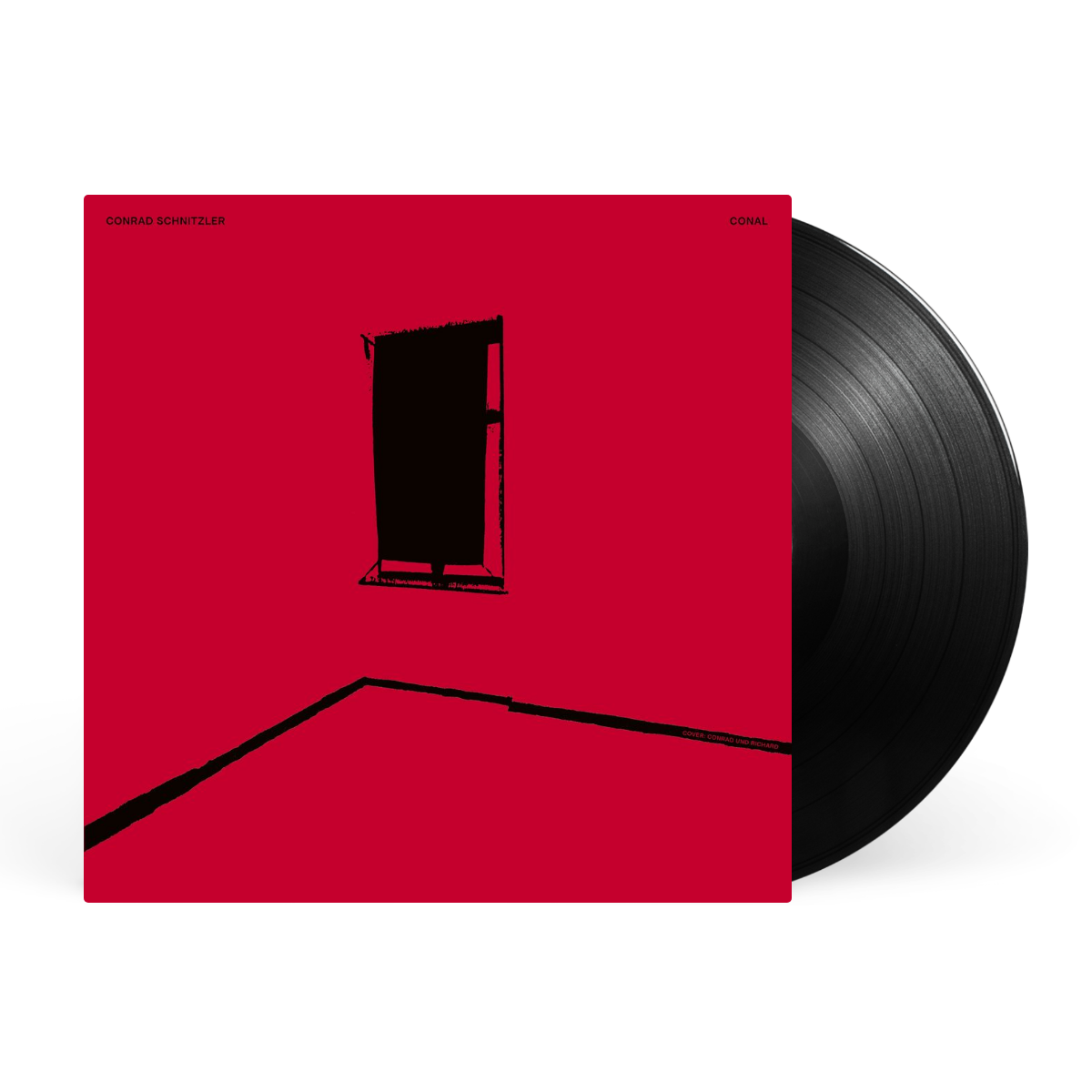
When Conal was released in 1981 on the Norwegian independent label Uniton Records with an initial run of 4,000 LPs, Schnitzler had already long been known beyond the borders of the Federal Republic of Germany and was now appreciated worldwide as a media artist and musician. In addition to the many cassette and LP editions he released himself, international labels were now increasingly releasing his music. In the same year as Conal, for example, the album Control was released on the American label DYS, followed in 1986 by "Concert" in the USA and "Consequenz 2" in Spain. Schnitzler worked tirelessly and his total work of art, including his music, was becoming increasingly multifaceted. Conal is a good example of this development. The titles of almost all Schnitzler albums begin with the syllable Con..., which is usually supplemented by a meaningful second syllable. Conal seems to be an exception, because what sense does the syllable ...al make in connection with Con...? "Conal" could more likely be the product name for a medicine or a wood glue. How did Schnitzler come up with this strange LP title? We don't know. And anyway, more important than this question is the music on the album, which also has something unusual for Schnitzler. The two tracks, each around 21 minutes long ("N1" and "N2"), are not cast from the same mould, but consist of several parts blended together, which are not noted as such in the credits. This sequence creates the character of a narrative divided into several chapters, which, however, does not offer the listener a concrete plot. Schnitzler was not a storyteller. When he divides long pieces into clearly distinguishable sections, as he does here in Conal, it is in order to create a kind of panoramic view of his current work phase in condensed form. The complexity of the individual sections and the extraordinarily skilful and technically flawless crossfades and layering suggest that Conal was once again produced in Peter Baumann's studio. Although the good relationship between the two musicians never led to a musical collaboration, Baumann repeatedly made his extremely well-equipped Paragon Studio available to Schnitzler. It is also conceivable that Baumann and his brilliant sound engineer Will Roper provided useful technical suggestions for the realisation of Schnitzler's music.
Conal is one of those albums that, when it was released in the early 1980s, astonished Schnitzler listeners in a positive way: Schnitzler had once again dared to take an artistic step forward. It is hard to comprehend that this restless, uncompromising artist released one high-calibre album after another in relatively quick succession. For he was not only a musician, but also a media artist, performer and author of art theory texts. Fortunately, Conal is one of the treasures from his catalogue of works, and I have already asked elsewhere: How many other treasures are waiting to be rediscovered? The grand mosaic that is Schnitzler still has gaps, even when the contours are clearly visible.