1
/
of
2
Oxford University Press
Dead Dharma: The Grateful Dead and the American Quest for Transcendenc
Dead Dharma: The Grateful Dead and the American Quest for Transcendenc
Regular price
€34,95 EUR
Regular price
Sale price
€34,95 EUR
Unit price
/
per
Duties and taxes included.
Shipping calculated at checkout.
Couldn't load pickup availability
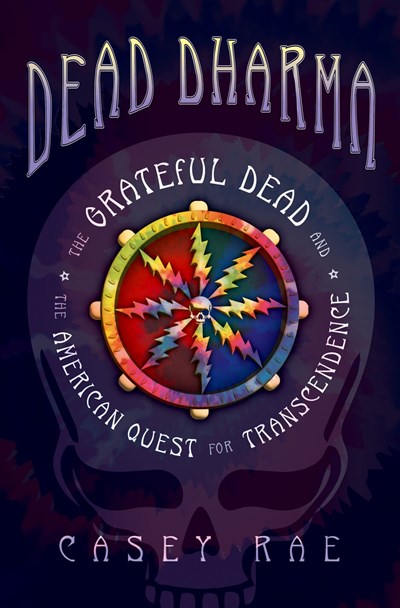
How did the Grateful Dead rise from 1960s San Francisco counterculture to become such unlikely guides for an American spiritual odyssey? Blending cultural history, spiritual sociology, and musicology, Casey Rae connects the band's improvisational ethos to ancient and contemporary Buddhist thought, early and ongoing psychedelic exploration, and the midcentury counterculture along with its commodified reincarnations. From the Beat Generation to today's spiritual supermarket, Dead Dharma shows how the Dead's music and mythos offered many a path of transcendence and ecstatic communion within the endless dance of impermanence.
What can the Grateful Dead teach us about impermanence, interconnection, and the quest for meaning? Dead Dharma: The Grateful Dead and the American Quest for Transcendence explores how the Grateful Dead and their cultural orbit became unlikely guides for America's spiritual journey. Blending spiritual sociology, musicology, and cultural history, Casey Rae situates the Dead within a lineage of seekers--from Transcendentalists and Beats to psychedelic pioneers and spiritual radicals shaped by Eastern philosophies and Indigenous wisdom. The book reveals how the band functioned as a living mandala: their concerts as psychedelic ritual spaces, their vast archive as sacred artifacts, and their ethos as a fusion of improvisation and awakening. Drawing on archival research, interviews, and lived experience, Dead Dharma illuminates how the Dead's improvisational soundtracks echo Buddhist concepts of impermanence, interdependence, and open awareness. Tracing the band'a evolution from the Beat-fueled San Francisco Renaissance to their enduring presence in contemporary culture (where for some they verge on religion,) Rae connects their musical and social experiment to the spiritual and philosophical currents of their era and beyond. In doing so, he shows how the Dead embodied both the promise and paradox of American transcendence. Blending cultural, musical, literary, and spiritual inquiry with polyphonic biography, Dead Dharma offers a vivid exploration of how the Dead's ecstatic experiment in sound and community resonates with timeless questions of social transformation, individual liberation, and what it means to be human in a world on fire.